
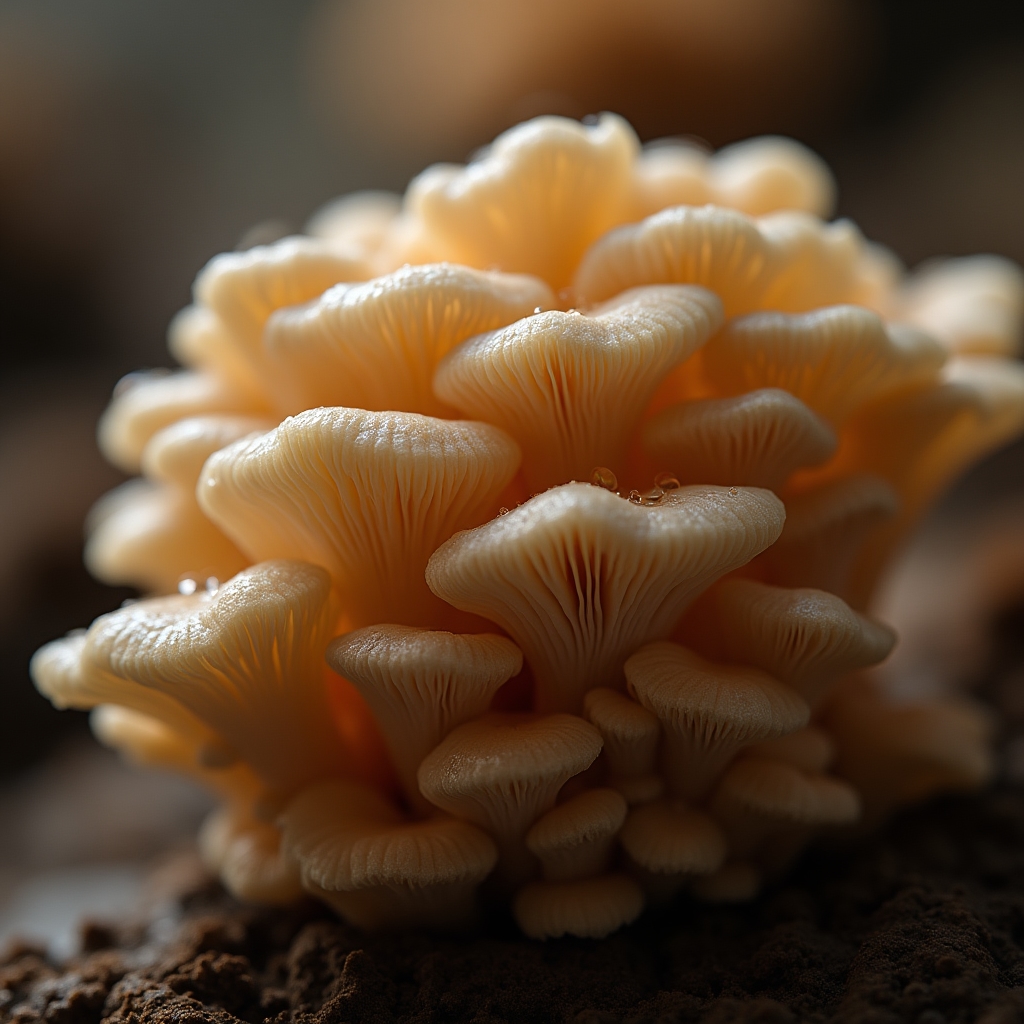
We started with one basement and a stubborn question.
Could a kitchen grow its own mushrooms without hiring a mycologist? It turns out yes, if someone else handles the biology.
The first room was smaller than a walk-in fridge
A few years back, a restaurant kitchen in Warsaw had a cold storage room that had gone unused after a renovation. Damp walls, an old compressor, nothing worth keeping as storage. We asked what it would take to turn that same dampness into an advantage instead of a problem. Mushrooms, as it happens, like exactly the conditions a kitchen tends to avoid: high humidity, low light, steady cool temperatures.
We built racks, ran misting lines off the existing plumbing, and set up basic sensors to hold humidity around 85 to 90 percent. Within three weeks the first oyster mushrooms were ready to pick. The chef harvested them himself, put them straight on that evening's menu, and asked when we could do a second room.

A few things we keep coming back to
The biology should be invisible to the kitchen
Kitchen teams already have enough to manage during service. Our job is to make the growing room simple enough that harvesting takes minutes, not a course in mycology.
Automation should fail safely, not silently
Every climate system we install sends an alert if humidity or temperature drifts outside range, so a small issue gets fixed before it affects a whole batch.
We stay close to our own cities
Rather than spreading thin across the country, we've kept our work concentrated in Warsaw and Łódź, where we can reach a client's room within the day if something needs attention.
Substrate quality is not negotiable
We source substrate blocks from suppliers we've worked with directly and inspect batches before they go into a client's room, because a weak block affects the whole month's yield.

Small team, split between biology and building work
We're a mix of people who came from mushroom cultivation, HVAC and refrigeration, and hospitality operations. That mix matters. A growing room is part construction project, part climate engineering, part agriculture, and it needs to work inside a functioning kitchen without disrupting service.
Every install starts with a conversation about the kitchen's actual needs, not a fixed package. Some clients want a small shelf unit producing enough for a daily special. Others want a full container room supplying an organic shop's produce counter. We size the room, and the training that comes with it, to match.
See what we buildWant to talk through whether your space could work?
Send us a few details about the room you're considering, container or basement, and we'll get back with an honest read on feasibility.
Contact the team